


_1cbb3979.JPG)
Hospitality Insurance in Oregon: The Complete Guide for Hotels, Restaurants, and Event Venues
Hospitality Insurance in Oregon: The Complete Guide for Hotels, Restaurants, and Event Venues

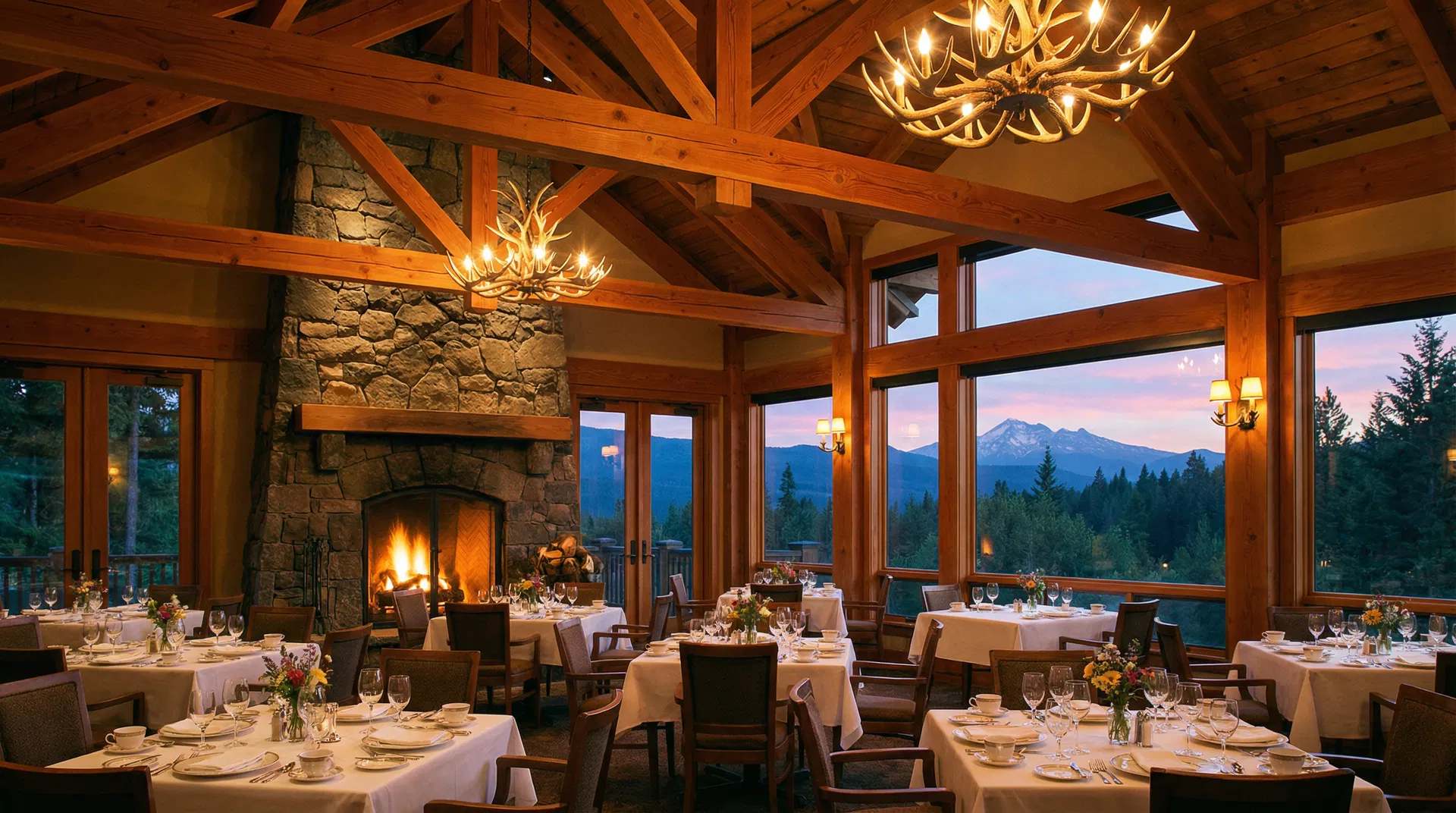
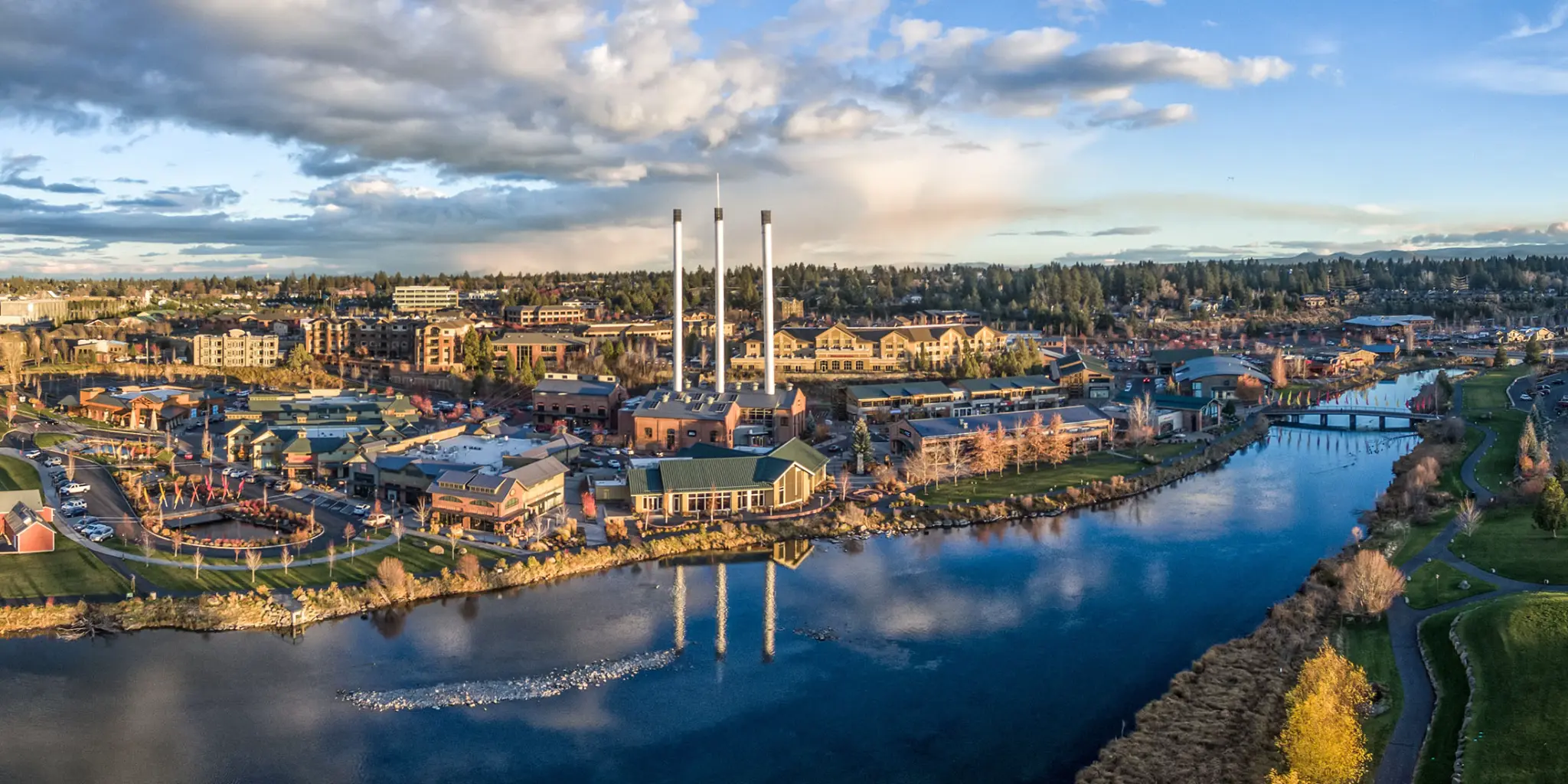
Oregon's hospitality industry is one of the most vibrant and diverse in the Pacific Northwest. From the award-winning restaurants of Portland's Pearl District to the rustic lodges near Crater Lake, from the craft breweries of Bend's Old Mill District to the event venues overlooking the Sisters Mountains — Oregon's hotels, restaurants, bars, and event spaces are the backbone of local tourism and community life. They are also among the most complex businesses to insure.
If you own or operate a hospitality business in Oregon, you face a risk profile that is genuinely different from most other industries. You serve alcohol to the public. You prepare and serve food. You employ a large, often part-time workforce in a physically demanding environment. You collect credit card data from thousands of guests. And in Central Oregon, you operate in one of the highest wildfire risk regions in the country. Getting your insurance right is not optional — it is the foundation of a sustainable business.
This guide covers every major coverage type that Oregon hospitality businesses need, explains the Oregon-specific legal requirements you must meet, and helps you understand how to structure a comprehensive insurance program that protects your investment.
What Is Hospitality Insurance?
Hospitality insurance is not a single policy — it is a package of coverages designed to address the specific risks faced by businesses in the food service, lodging, and event industries. A well-structured hospitality insurance program typically combines general liability, liquor liability, commercial property, business interruption, workers' compensation, cyber liability, and employment practices liability into a coordinated program that leaves no significant gaps.
The right combination depends on your specific business type, size, location, and operations. A boutique hotel in Bend has different needs than a food cart in Portland. A winery event venue in the Willamette Valley faces different risks than a sports bar in Redmond. An independent insurance agent who specializes in commercial coverage — like the team at Insure Pacific — can help you build a program that fits your operation precisely.
General Liability: The Foundation of Every Hospitality Policy
General liability insurance is the cornerstone of any hospitality insurance program. It covers third-party claims for bodily injury and property damage arising from your business operations — the slip-and-fall in your lobby, the guest who trips on a step at your event venue, the parking lot accident involving a customer's vehicle. For hospitality businesses, general liability is not just important — it is often contractually required by landlords, event organizers, and licensing authorities.
In Oregon, general liability policies for hospitality businesses typically start at $1 million per occurrence and $2 million aggregate. However, many venues and hotels carry higher limits, particularly if they host large events, serve alcohol, or operate in high-foot-traffic environments. The cost of a single serious slip-and-fall claim — including medical expenses, lost wages, and legal defense — can easily exceed $500,000, making adequate limits essential.
Your general liability policy should be reviewed carefully for exclusions. Many standard policies exclude assault and battery claims, which are a significant exposure for bars and nightclubs. If your business serves alcohol and stays open late, you may need a specific assault and battery endorsement or a separate policy to cover this gap.
Liquor Liability: Oregon's OLCC Requirement and Your Business
If your Oregon hospitality business sells, serves, or furnishes alcohol, liquor liability insurance is not optional — it is a practical necessity and, in many cases, a condition of your Oregon Liquor and Cannabis Commission (OLCC) license. Oregon's dram shop laws create significant liability exposure for businesses that serve alcohol to visibly intoxicated persons who then cause injury or property damage to third parties.
The financial exposure from a single liquor liability claim can be staggering. If a guest leaves your restaurant after consuming alcohol and causes a serious traffic accident, your business can be held liable for the injuries and deaths that result. Jury awards in dram shop cases regularly exceed $1 million, and in catastrophic cases, can reach into the tens of millions. Liquor liability insurance protects your business — and your personal assets — from these claims.
Oregon hospitality businesses should ensure their liquor liability policy covers: service to visibly intoxicated persons, service to minors (even when ID was checked), and claims arising from off-premises consumption. The ratio of your alcohol sales to total revenue is a key underwriting factor — businesses where alcohol represents a higher percentage of revenue typically pay higher premiums and face stricter underwriting scrutiny.
At Insure Pacific, we work with carriers who specialize in Oregon hospitality accounts and understand the nuances of OLCC licensing and dram shop liability. Request a quote to see what liquor liability coverage costs for your specific operation.
Commercial Property Insurance: Protecting Your Physical Investment
The physical assets of a hospitality business represent an enormous investment. Your building or leasehold improvements, commercial kitchen equipment, point-of-sale systems, furniture, fixtures, signage, and inventory all need to be protected against fire, theft, vandalism, and weather events.
Commercial property insurance for hospitality businesses should be written on a replacement cost basis — not actual cash value. The difference matters enormously after a loss. If your restaurant suffers a kitchen fire and your policy pays actual cash value, you will receive the depreciated value of your equipment, which may be a fraction of what it costs to replace it with new equipment and reopen your doors. Replacement cost coverage pays what it actually costs to rebuild and re-equip, without depreciation deductions.
In Central Oregon, wildfire is a significant property risk that deserves special attention. Businesses in Bend, Sisters, Redmond, and surrounding communities should review their policy carefully for wildfire coverage, including coverage for smoke damage (which can be extensive even when a building is not directly burned). Our wildfire insurance specialists can help you understand your coverage and identify any gaps.
Business Interruption Insurance: When You Cannot Open Your Doors
One of the most underappreciated coverages in hospitality insurance is business interruption (also called business income) insurance. If a covered loss — fire, flood, equipment breakdown, or another insured peril — forces you to close temporarily, business interruption insurance replaces your lost income and covers your continuing fixed expenses (rent, loan payments, payroll for key employees) during the period of restoration.
For hospitality businesses, the period of restoration can be lengthy. Rebuilding a commercial kitchen after a fire, replacing specialized equipment, and navigating health department re-inspections can take months. Without business interruption coverage, many hospitality businesses that suffer a major loss never reopen. Industry data suggests that more than 40 percent of small businesses that experience a major disaster do not recover financially.
Business interruption coverage should be carefully sized to reflect your actual revenue and the realistic time it would take to rebuild and reopen. Many policies include a 72-hour waiting period before coverage begins, and coverage limits should be set to cover at least 12 months of lost income. Extended period of indemnity endorsements can provide additional coverage for the time it takes to rebuild your customer base after reopening.
Workers' Compensation: Oregon's Mandatory Coverage
Oregon law requires every employer with one or more employees to carry workers' compensation insurance. For hospitality businesses, this is not just a legal requirement — it is a critical financial protection. The hospitality industry has one of the highest workplace injury rates of any sector, with kitchen burns, slip-and-fall injuries, repetitive motion injuries, and heavy lifting incidents occurring at rates significantly above the national average for all industries.
Oregon's workers' compensation system is administered by the Workers' Compensation Division and provides benefits for medical treatment, temporary disability (wage replacement), permanent disability, and vocational rehabilitation for injured workers. Premiums are calculated based on your payroll and your industry classification code, which reflects the historical claims experience of similar businesses.
Hospitality businesses can manage workers' compensation costs through effective safety programs, prompt injury reporting, and return-to-work programs that help injured employees return to modified duty while they recover. Our workers' compensation specialists can help you understand your obligations and find competitive coverage.
Independent Insurance Agency Since 1935
Not Sure If You Have the Right Coverage?
Our licensed agents compare 50+ carriers to find you the best coverage at the right price — at no extra cost to you.
Cyber Liability: The Hidden Risk in Every Hospitality Business
Every hospitality business that accepts credit cards, maintains a reservation system, or stores guest information is a potential target for cybercriminals. Hotels and restaurants are among the most frequently targeted industries for data breaches, primarily because they process large volumes of payment card transactions and often have less sophisticated cybersecurity infrastructure than larger enterprises.
The average cost of a data breach for a small business exceeds $200,000, including notification costs, credit monitoring for affected customers, regulatory fines, and legal defense. Oregon's Consumer Identity Theft Protection Act (ORS 646A.600) requires businesses to notify affected Oregon residents of a data breach within 45 days — and failure to comply can result in significant civil penalties.
Cyber liability insurance covers breach response costs, notification expenses, credit monitoring, regulatory defense, and third-party liability claims from affected customers. It also typically covers business interruption losses from a cyber event — an increasingly important coverage as point-of-sale systems and reservation platforms become essential to daily operations.
Employment Practices Liability: Protecting Against HR Claims
The hospitality industry's workforce characteristics — high turnover, diverse workforce, part-time and seasonal employees, tip-based compensation, and close working conditions — create significant employment practices liability exposure. Claims for sexual harassment, wrongful termination, discrimination, and wage-and-hour violations are more common in hospitality than in most other industries.
Employment Practices Liability Insurance (EPLI) covers legal defense costs and settlements arising from employment-related claims. In Oregon, where employment law is among the most employee-protective in the country, EPLI is an important coverage for any hospitality business with employees. Oregon's Bureau of Labor and Industries (BOLI) actively enforces wage and hour laws, anti-discrimination statutes, and family leave requirements — and violations can result in significant financial exposure.
EPLI policies are typically written on a claims-made basis, meaning the claim must be filed during the policy period to be covered. Coverage limits should reflect the size of your workforce and the potential severity of employment claims in your market.
Food Contamination and Product Liability
A foodborne illness outbreak can be devastating for a restaurant or food service business — not just financially, but reputationally. Product liability coverage protects your business against claims arising from food that causes illness or injury. This includes coverage for the cost of recalling contaminated food products, the business interruption losses from a forced closure during a health department investigation, and the legal defense and settlement costs from claims by affected customers.
Oregon's food safety regulations, administered by the Oregon Department of Agriculture and local county health departments, require food service businesses to maintain specific standards for food handling, storage, and preparation. A violation that results in a closure can cost tens of thousands of dollars in lost revenue before you even consider the cost of defending against customer claims.
Umbrella and Excess Liability: The Extra Layer You Need
For hospitality businesses, umbrella or excess liability insurance provides an additional layer of protection above your underlying general liability, liquor liability, and auto liability policies. Given the severity of claims that can arise in the hospitality industry — a serious slip-and-fall, a catastrophic liquor liability claim, a multi-vehicle accident involving a delivery driver — umbrella coverage is not a luxury. It is a practical necessity for any business with significant assets to protect.
Umbrella policies typically start at $1 million in additional coverage and can be purchased in increments up to $10 million or more. The cost is relatively modest compared to the protection provided, and the peace of mind of knowing that a single catastrophic claim will not wipe out your business is invaluable.
Oregon-Specific Risks for Hospitality Businesses
Central Oregon hospitality businesses face several risks that are unique to this region and deserve specific attention in your insurance program.
Wildfire evacuation and business interruption. During major wildfire events, mandatory evacuation orders can force hospitality businesses to close for days or weeks at a time — even if the business itself is never directly threatened by fire. Standard business interruption policies typically require a direct physical loss to trigger coverage. Businesses in high-risk areas should ask about civil authority coverage, which can provide business interruption benefits when a government authority prohibits access to your premises due to a nearby covered loss.
Seasonal staffing and workers' compensation. Many Central Oregon hospitality businesses rely heavily on seasonal workers, particularly during ski season at Mt. Bachelor and summer tourism season. Seasonal employees must be covered by workers' compensation, and their payroll must be accurately reported to your carrier. Misclassifying employees as independent contractors to avoid workers' compensation premiums is a common and costly mistake.
Event venue liability. Oregon's growing agritourism and event venue sector — wineries, farm-to-table venues, outdoor wedding venues — faces a complex liability environment. If you host events on your property, your general liability policy must specifically cover event-related activities, including alcohol service, outdoor activities, and the use of third-party vendors. Many standard commercial policies have exclusions that can leave event venues significantly underinsured.
How Much Does Hospitality Insurance Cost in Oregon?
The cost of hospitality insurance in Oregon varies significantly based on the type of business, annual revenue, payroll, claims history, and location. As a general guide, a small independent restaurant with $500,000 in annual revenue might pay $8,000 to $15,000 per year for a comprehensive insurance program including general liability, liquor liability, property, and workers' compensation. A larger hotel or event venue with $2 million or more in revenue could pay $30,000 to $75,000 or more annually.
The best way to understand what your specific operation will cost to insure is to work with an independent agent who can shop your account across multiple carriers. At Insure Pacific, we work with more than 50 carriers, including specialists in hospitality and food service accounts, to find the best combination of coverage and price for your business.
Working With an Independent Agent for Hospitality Insurance
Hospitality insurance is a specialty area that requires an agent with experience in the industry. The right agent will understand the nuances of OLCC licensing, Oregon's dram shop laws, the specific underwriting requirements of hospitality carriers, and the unique risks of operating in Central Oregon's wildfire-prone environment.
As an independent agency, Insure Pacific is not tied to any single carrier. We represent your interests, not the insurance company's. We shop your account across multiple markets, explain your options clearly, and help you make informed decisions about coverage. We also provide ongoing service — reviewing your coverage at renewal, helping you navigate claims, and adjusting your program as your business grows and changes.
Whether you operate a restaurant in Bend, a hotel in Sunriver, a winery event venue in the Willamette Valley, or a food truck at the Bend Farmers Market, Insure Pacific has the expertise and carrier relationships to build a hospitality insurance program that protects your business. Request a free quote online, call us at (541) 238-7775, or visit our contact page to connect with a licensed commercial insurance agent today.
Ready to Get Protected?
Talk to a Local Oregon Insurance Expert
Insure Pacific has been serving Oregon families and businesses since 1935. We work with 50+ carriers so you get real options — not just one company's answer.
Get in Touch
Ready to protect what matters most? Contact us today for a no-obligation insurance review. Our experienced agents are here to help you find the right coverage for your needs.


Monica
Insurance Specialist
Hi there! 👋
I'm the AI version of Monica here at Insure Pacific!
Ask me anything about insurance — home, auto, farm, commercial, wildfire, and more. I can answer your questions directly or connect you with one of our agents.